Here’s what I see in restaurants: around 80% of customers decide to enter after seeing digital displays. Restaurant digital signage influences purchasing decisions before guests taste your food. Brands using digital displays report sales increases up to one-third in volume, and transaction margins rise by an average of 3%.
This isn’t about replacing great food. It’s about creating an environment where customers want to return again and again.
In this piece, I’ll walk you through how restaurant digital signage software builds that experience, from the moment guests notice your screens to the customized touches that make them feel recognized every visit.
Digital signage creates memorable first impressions
Visual appeal captures attention in an instant
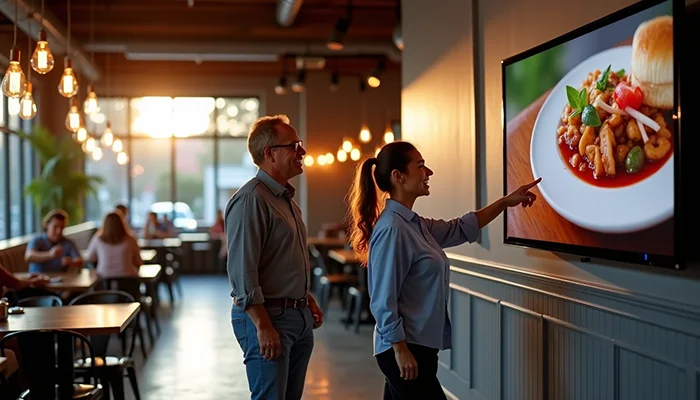
Digital menu boards capture 400% more views compared to static displays. I’ve watched customers walk past traditional printed menus without a second glance, but screens with high-resolution food imagery stop them mid-stride.
Your brain processes visual information in as little as 13 milliseconds. Restaurant digital signage software uses this by displaying vibrant images that stimulate appetite before customers even sit down. Guests see dishes presented in vivid detail through high-quality photography and explore add-ons and premium selections more often.
The effect shows in retention numbers. Restaurants using digital displays increase customer retention by up to 30%. Motion graphics work well because subtle movement catches the eye without overwhelming the space. A slow-motion shot of a sizzling burger or carbonation rising in a drink creates visual interest that static images cannot match.
Dynamic content sets the mood
Atmosphere influences appetite more than most restaurant owners realize. I adjust screen content based on time of day to match what customers need. Bright and energetic visuals during breakfast hours promote a lively atmosphere. Service shifts to dinner and calmer, more sophisticated imagery creates a relaxing ambiance that encourages guests to stay longer.
A sushi restaurant might display serene underwater scenes to complement seafood offerings. This thematic approach turns meals into immersive experiences that line up with your restaurant’s decor. Knowing how to shift ambiance through restaurant menu digital signage helps set the perfect tone for each dining period.
Up-to-the-minute updates keep content fresh in locations of all sizes. You highlight daily specials or seasonal items with vibrant visuals and drive impulse purchases that boost revenue.
Brand identity comes alive on screens
Quick service restaurant digital signage reinforces your identity through consistent use of colors, fonts and layouts. A modern burger chain might emphasize bold typography and energetic visuals. Fine-dining establishments use elegant transitions and chef storytelling to convey sophistication.
Cloud-based restaurant digital signage software allows centralized control over messaging and promotional templates. This will give every branch the same brand personality and build customer familiarity over time. Strategic colors matter too. Reds, yellows and oranges stimulate appetite and create urgency. Greens evoke freshness.
Waiting feels shorter with involving digital content
Entertainment reduces wait time perception
Customers who involve themselves with restaurant digital signage see wait times drop by 35% in their perception. The actual wait hasn’t changed, but the experience has. Screens catch the attention of 63% of people during waits, which matters when diners lose patience after just 22 minutes.
Entertainment content moves focus away from watching the clock. News updates, weather forecasts, sports scores and social media feeds keep minds occupied. A restaurant showing behind-the-scenes kitchen footage or chef interviews creates connection while guests wait. Some establishments display movie trailers or live TV channels in holding areas and turn downtime into opportunities for involvement.
The psychology here is straightforward. Occupied time feels shorter than unoccupied time. Restaurant menu digital signage that provides relevant content stops customers from obsessing over how long they’ve been standing.
Queue management keeps customers informed
Transparency reduces wait anxiety more than speed alone. Immediate queue updates show customers where they stand and what to expect. IKEA’s Dubai location integrated Wavetec’s UNO-Q system with digital displays and showed which checkout counters were open. This reduced confusion during peak hours.
Quick service restaurant digital signage connected to queue management systems provides automated updates. Customers see their position, estimated wait times and which service area to approach next. This clarity matters when 40% of customers say bad waiting experiences damage restaurant reputations.
Interactive displays turn waiting into an experience
Interactive elements transform passive waiting into active participation. QR codes placed alongside restaurant digital signage templates allow customers to complete digital forms, browse menus or join loyalty programs. Gamification features like trivia quizzes or brand-related challenges keep guests involved.
These interactions serve dual purposes. Customers stay entertained while restaurants collect valuable data and build connections. Free Wi-Fi combined with rotating content about food sourcing or local partnerships strengthens community ties[63].
Restaurant digital signage software builds emotional connections
Social media feeds create community
Live social media feeds on restaurant digital signage display customer posts and reviews with up-to-the-minute data analysis. Guests see photos of other diners who enjoy meals tagged with your branded hashtag and want to participate. McDonald’s expresses Instagram posts with official hashtags on drive-thru screens and links physical and digital spaces.
Hashtag campaigns encourage customers to share content for a chance to appear on your screens. This gets organic content and gives guests excitement about involvement. Your brand visibility expands beyond your four walls as customers share experiences on personal profiles.
Customer reviews and testimonials build trust
Four in five customers trust recommendations from other diners more than they trust ads. Restaurant menu digital signage that showcases positive reviews creates authenticity traditional marketing cannot replicate. Credibility builds before orders are placed when you display snippets from Yelp or Google Reviews alongside food visuals.
User-generated content makes guests feel valued
UGC impacts purchasing decisions for 79% of people. Consumers find user-generated content 9.8 times more effective than influencer content. Quick service restaurant digital signage features customer photos or feedback and gives guests recognition. This strengthens their connection to your brand and motivates others to participate, which creates ongoing involvement cycles.
Customer content builds loyalty. Regular visitors who see their posts displayed feel celebrated. This encourages repeat visits and continued sharing.
Local events and partnerships show community involvement
Tim Hortons uses restaurant digital signage templates to promote local festivals, charity drives and community announcements. Your restaurant becomes a community hub when you highlight nearby events. Sponsorship opportunities with local businesses shown on screens demonstrate area support and open cross-promotion possibilities. Charity events and environmental initiatives strengthen your reputation as a responsible business and attract customers who value social responsibility.
Quick service restaurant digital signage makes every visit feel tailored
Loyalty program reminders encourage repeat visits
Connected loyalty platforms display custom rewards and greet returning customers by name through restaurant digital signage software. This recognition drives a 32.8% increase in repeat buyers. McDonald’s uses digital kiosks to show tailored upselling options during ordering, improving both experience and sales.
Quick service restaurant digital signage prompts non-members to join loyalty programs by highlighting redeemable points for each transaction. Animated reminders promote subscriptions on screens, and exclusive discounts for members create urgency. A QSR might showcase a “double points day” on digital menu boards, motivating customers to participate.
Time-based menu changes match customer needs
Breakfast items appear during morning hours, lunch options during midday rush, and dinner selections in the evening. This dayparting adjusts without staff involvement. Menus adapt based on weather triggers as well. Iced drinks get promoted on hot days, and warm soups appear when temperatures drop.
Smart upselling feels helpful, not pushy
Restaurant menu digital signage suggests relevant add-ons based on current orders rather than generic prompts. Screens recommend upgrades like adding fries or premium combos when someone orders a meal. AI-driven platforms adjust suggestions based on time, weather and inventory levels, making recommendations feel contextually appropriate rather than forced.
Conclusion
Great food brings customers through your door once. Restaurant digital signage brings them back repeatedly. The numbers speak for themselves: higher retention rates and stronger emotional connections with your brand. Screens transform ordinary dining into experiences customers remember and want to repeat.
The right digital signage software creates that competitive edge, whether you run a quick service location or fine dining establishment. Your customers have already shown what captures their attention and loyalty.
Key Takeaways
Restaurant digital signage transforms customer experiences beyond food quality, creating memorable interactions that drive loyalty and repeat visits through strategic visual engagement.
• Digital displays capture 400% more views than static menus and increase customer retention by up to 30% through vibrant visuals and dynamic content • Interactive screens reduce perceived wait times by 35% while building emotional connections through social media feeds and user-generated content • Personalized loyalty reminders and time-based menu changes create tailored experiences that increase repeat buyers by 32.8% • Strategic visual psychology using appetite-stimulating colors and motion graphics drives impulse purchases and boosts transaction margins by 3%
When implemented effectively, restaurant digital signage software becomes the bridge between great food and unforgettable experiences, turning first-time visitors into loyal customers who return for both the cuisine and the atmosphere you’ve created.