
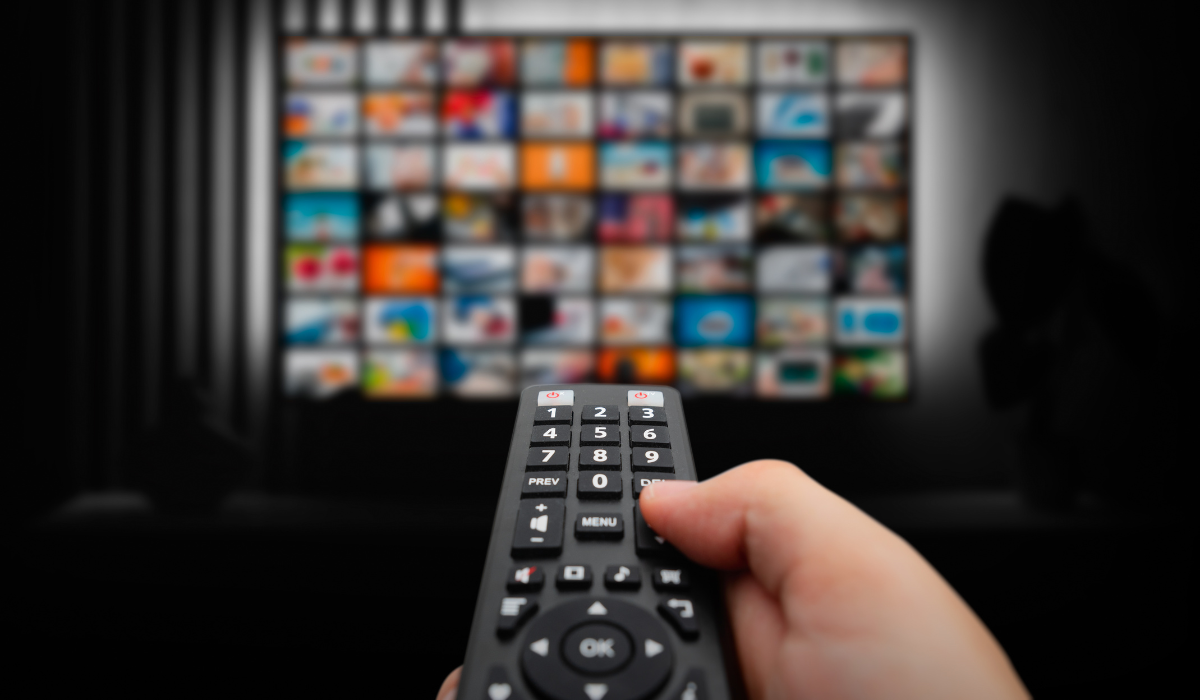
The debate around TV advertising vs internet advertising moved in 2016 when internet advertising surpassed television to become the largest advertising channel in the U.S. This is a big deal as it means that the channel exceeded $100 billion annually since 2018. This transformation reflects a fundamental change in how businesses reach their audiences. But understanding what is the difference between TV ads and internet ads goes beyond just budget allocations. Digital advertising research shows that interactive screens create engagement levels traditional advertising cannot match. Costs range from just $15 to $100 per month. In this piece, we’ll explore TV advertising vs digital marketing effectiveness and compare TV advertising vs social media engagement. We’ll also get into why digital screens keep customers watching longer.
Understanding TV Advertising vs Internet Advertising
What is TV Advertising
Television advertising promotes products or services through commercials broadcast during designated time slots on TV channels. The first commercial aired on July 1, 1941, at 2:30 p.m. on NBC’s New York station WNBT before a baseball game. TV advertising has evolved into a multi-billion dollar industry that continues adapting to new technologies over the last several years.
TV ads run 15 to 30 seconds and combine visual elements with sound and storytelling to reach large audiences at once. Advertisers secure airtime during programs, with costs varying based on viewership, time of day, and programming popularity. The medium spans broadcast, cable, satellite, and streaming platforms. Viewers can watch on smart TVs, phones, tablets, and computers.
What is Internet Advertising
Internet advertising uses the Internet to promote products and services to audiences on digital platforms of all types. This form has email marketing, search engine marketing, social media marketing, display advertising, and mobile advertising. Automated software systems operating across multiple websites and platforms deliver advertisements, known as programmatic advertising.
Internet advertising revenues in the United States totaled $83.00 billion during 2017, a 14% increase over the $72.50 billion in revenues during 2016. Online advertising spend reached $125.20 billion in the United States during 2019, some $54.80 billion higher than the spend on television at $70.40 billion.
Key Differences Between TV Ads and Internet Ads
The difference between traditional advertising and digital advertising centers on four areas: targeting capabilities, measurement precision, cost structure, and content flexibility.
TV advertising focuses on mass reach and broadcasts messages to millions of viewers at once. Advertisers select channels, time slots, and geographic locations, but targeting remains broad. Internet advertising allows businesses to pinpoint demographics and behaviors with precision.
Measurement presents another stark contrast. Internet advertising provides immediate campaign performance data through analytics tools, while TV campaigns relied on indirect methods like customer surveys to gage effectiveness. Digital platforms deliver detailed insights into ad performance right away.
Cost structures differ. TV commercial production and airtime require investment, often prohibitive for smaller businesses. Internet advertising presents an economical alternative and accommodates businesses of all sizes with flexible budget allocation based on performance.
Why Digital Screens Keep Customers Watching Longer
Real-Time Content Updates
Digital screens maintain viewer attention through constantly refreshing information that traditional advertising cannot replicate. Businesses display live data feeds, weather updates, or social media content and create dynamic messaging that appeals to viewers and gets more engagement. Up-to-the-minute digital signage allows us to showcase tailored content such as dynamic promotions, live event schedules, or estimated wait times. This enhances customer satisfaction by meeting specific needs at the moment.
Retailers can adjust in-store promotions based on live sales data. They move overstocked items and maximize revenue opportunities. Transportation hubs display up-to-the-minute flight or train schedules, gate changes and delays. Travelers get the latest information at a glance. This access reduces frustration and streamlines navigation.
Interactive Elements and Engagement
Interactive content gets 52.6% higher engagement rates than static content. The active participation required helps encourage a deeper connection between brand and user. This leads to stronger brand loyalty. 81% of marketers agree that interactive content like calculators, quizzes and surveys are more effective at grabbing attention than static content.
Research shows interactive content gets 4-5x more pageviews on average compared to static content. Interactive digital signage can boost customer dwell time by 30 to 50%. This helps make additional impulse purchases.
Personalized Messaging
Personalization allows brands to deliver more relevant and meaningful messages. User satisfaction increases and perceived content value enhances. AI-powered digital signage promotes the highest margin products according to customers’ behavior and just need. Brands gather data on how users participate, what interests them and what drives their decisions through interactive content.
Multi-Sensory Experience
Multiple senses increase memorability, deepen emotional connection and build brand loyalty. People can distinguish around 10,000 different scents but only 200 colors. We remember scents up to seven times better than anything we saw, touched, tasted or heard. Sensory marketing changes people from passive viewers to active participants. It bypasses rational thought processes to connect with emotional centers and create stronger connections.
Comparing Effectiveness: Traditional TV Advertising vs Digital Marketing
Audience Reach and Targeting
Television remains the primary driver of audience reach in cross-platform campaigns. Average impressions from TV are 8x greater than impressions from digital campaigns that want to reach the 18-49 demographic. A single primetime TV spot reaches millions of viewers in geographic locations of all types and works well for mass awareness. Digital ads brought an incremental 16% to the total reach of campaigns that want to reach people between ages 18-49.
TV excels at mass reach. Digital platforms offer precision targeting and allow advertisers to use parameters such as job title, seniority, geography, and interests. Cross-platform campaigns with ads served on both TV and digital devices reached 59% of audiences between ages 18-34.
Cost Comparison
A prime-time national TV spot costs anywhere from $115,000 to $425,000 for 30 seconds. TV ad spending in the U.S. amounted to almost $67.00 billion in 2022. Digital ad spending worldwide amounted to $549.51 billion in 2022 and is projected to grow to $870.85 billion in 2027.
Digital advertising accommodates any budget. Entry points are as low as $5 per day on platforms like Facebook or Google Ads. Most small businesses spend between $9,000 to $10,000 monthly for solid digital presence.
Measuring Results and ROI
A study by the Advertising Research Foundation shows that brands can increase return on investment by 19% by increasing from one media platform to two. The combination of TV and digital delivers 60% greater ROI. That same study found that using a budget with 78% spending on traditional media to 22% digital worked best for audiences as a whole.
Digital platforms provide complete analytics and immediate tracking that allow instant campaign adjustments. TV offers limited performance tracking and relies on delayed metrics like surveys.
Content Flexibility
Digital advertising allows marketers to launch quickly and test multiple variations. They can shift spend in response to immediate performance data. Traditional advertising requires upfront investment for creative development and media placement. This makes course changes difficult and expensive once campaigns are live.
Digital Advertising Research: What the Data Shows
Customer Attention Span Statistics
Recent studies reveal dramatic moves in how audiences process advertising content. Gen Z loses active attention for ads after just 1.3 seconds, less time than any other age group. Microsoft research shows human attention span has dropped to eight seconds and shrunk nearly 25% in just a few years. Americans now spend roughly 13 hours a day with media, yet most browse the internet or apps while watching TV.
Engagement Metrics Comparison
Eye tracking data shows YouTube viewers had fixations off the screen 18.28% of the time. TV viewers had fixations off screen 9.44% of the time. Positive emotions were a lot higher for TV viewing at 3.53 versus 3.08 for YouTube. Social media ads achieved a 3.28% click-through rate, above the 1.24% average for Facebook ads.
Brand Recognition Studies
A Stanford study showed that internet ads perform on par with TV ads on brand-building metrics when accounting for pre-existing brand knowledge. TV appears more effective without thinking over original conditions, but once pre-existing differences are factored in, brand recall lift measures for internet ads are statistically indistinguishable from TV.
Long-Term Value Creation
Digital channels create substantial long-term returns. Meta-commissioned research found that long-term ROI comprised almost 60% of total ROI across multiple studies. Meta apps drove 52% higher total ROI than the average channel. Traditional and online display advertising create measurable brand assets. A 0.1% increase in online display spending leads to a 41% increase in brand recognition probability.
Conclusion
Digital advertising has transformed how we connect with audiences. It offers precision targeting and measurable results that traditional TV cannot match. Television still delivers mass reach. Digital screens keep customers engaged longer through interactive elements, customized messaging and immediate updates. The most effective approach combines both mediums. Digital platforms provide the flexibility and economical solutions that modern businesses need to thrive, whether you work with a modest budget or substantial resources.
Key Takeaways
Digital advertising has revolutionized customer engagement by delivering interactive, personalized experiences that keep audiences watching longer than traditional TV commercials.
• Digital screens boost engagement by 30-50% through real-time content updates, interactive elements, and personalized messaging that traditional TV cannot match.
• Internet advertising offers superior targeting precision at a fraction of TV costs, with entry points as low as $5 per day versus $115,000-$425,000 for prime-time TV spots.
• Interactive content generates 52.6% higher engagement rates than static ads and receives 4-5x more pageviews, creating deeper brand connections.
• Combined TV and digital campaigns deliver 60% greater ROI than single-platform approaches, with optimal budget allocation being 78% traditional and 22% digital.
• Digital platforms provide real-time analytics and instant campaign adjustments, while TV relies on delayed metrics and requires significant upfront investment with limited flexibility.
The most effective advertising strategy leverages both mediums strategically, using TV for mass awareness and digital for precision targeting and engagement optimization.