
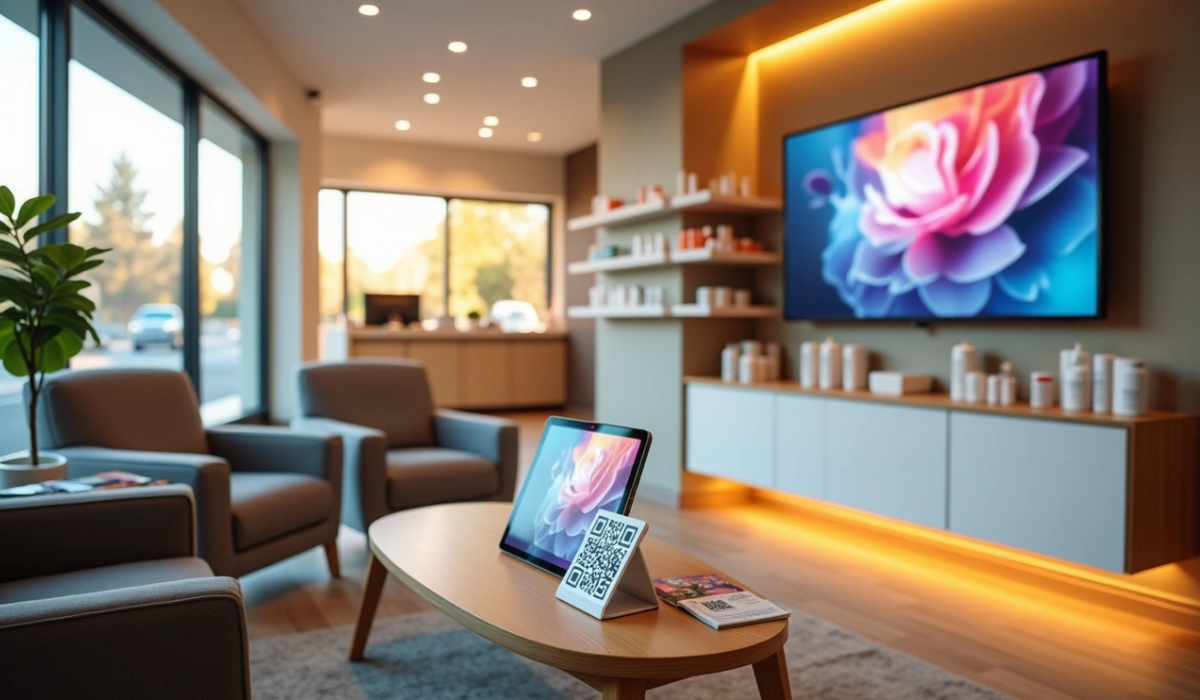
Your patients wait an average of 45 minutes in your waiting room.
And chances are, you’re treating that time like dead space.
I see this pattern everywhere. Practices that run like clockwork when it comes to patient care, but completely miss the revenue opportunity happening right under their noses.
The numbers tell the story. Medical offices that figured this out have seen their revenue double through product sales. Others report steady 10 to 15 percent increases year-over-year.
That’s not luck. That’s strategy.
Here’s what most practice owners don’t realize.
Those 45 minutes aren’t wasted time. They’re prime real estate for your business. Your patients are already there. They’re already engaged with your practice. And they’re looking for something to do while they wait.
The question isn’t whether you should be using that time. The question is how.
This isn’t about turning your waiting room into a pushy sales floor.
It’s about creating genuine value for your patients while building a sustainable revenue stream for your practice. I’ll walk you through exactly how to set this up, from choosing the right approach for your space to proven tactics that turn waiting patients into paying customers.
Because the revenue opportunity is already sitting there.
You just need to know how to activate it.
What You’re Missing When You Ignore Your Waiting Room
It’s Simpler Than You Think
Waiting room marketing turns idle time into income. That’s it.
You use the physical and digital spaces where your patients wait to promote products, services, educational content, or even third-party advertisements. It works for medical offices, salons, automotive shops, law firms, and any business where clients spend time before service.
The revenue potential is real. Dr. Reynolds doubled her practice revenue by selling supplements displayed on waiting room bookshelves. Dr. Phyllis Okereke has been doing this for 15 years and reports consistent 10 to 15 percent year-over-year revenue increases. These aren’t isolated cases. Medical practices across the country are building secondary revenue streams through direct product sales, advertising space, and digital engagement.
Physical vs Digital: Both Work, But Differently
Physical waiting room marketing is exactly what it sounds like. Products sit on display shelves where patients can browse and buy directly. Posters and brochures line the walls with information about services or health topics.
The research backs this up. 82 percent of people notice posters in waiting areas, and 92 percent actually read the content. Traditional methods work, but they’re limited by physical space and can’t change without someone physically updating them.
Digital waiting room marketing operates through screens, virtual queues, and interactive platforms. Digital signage displays rotating content from health education to promotional offers. Virtual waiting rooms let customers join queues remotely, browse services online, and receive appointment updates on their phones.
One large football club includes affiliate links on their queue page, directing ticket buyers to booking partners for transport and accommodation. The content updates in real time and reaches customers both on-site and remotely.
The Money You’re Leaving on the Table
Americans collectively spend 1.1 billion hours annually getting medical care, valued at $52 billion. Of that total, $28 billion represents time wasted in waiting areas.
Hospital waiting rooms see patients spend anywhere from 30 minutes to several hours. Every minute of that time is an opportunity to generate revenue or build stronger patient relationships.
Here’s what that looks like in practice. One healthcare practice using digital signage saw a 45 percent increase in mammogram bookings and a 15 percent jump in patient portal signups. Those numbers represent actual revenue and engagement that other practices are missing.
Calculate your specific opportunity by considering missed product sales, unutilized advertising space, and uncaptured patient data. The numbers add up faster than you might think.
Building Your Foundation That Actually Works
The good news is you don’t need to overcomplicate this.
Most practices get stuck thinking they need some elaborate system before they can start. But the best waiting room marketing starts simple and builds from there.
Your foundation depends on matching the right tools to how your patients actually behave. If they’re comfortable with technology, QR codes can prompt welcome videos or direct new patients to different content than returning ones. If they prefer hands-on experiences, physical displays work better.
One restaurant increased texting subscribers by 500% in a single week using simple 11×17 posters where people could see them while waiting. No fancy technology required.
Pick Technology That Fits Your Practice
Virtual waiting room software runs anywhere from $29 to $200 per location monthly. That’s not a huge investment when you consider the revenue potential.
Cloud-based platforms let you manage multiple locations from one dashboard. For healthcare settings, HIPAA-compliant options exist with signed BAAs. Analytics tools track wait times, service durations, and visitor flow so you can actually see what’s working.
But here’s the thing. You don’t need every bell and whistle on day one.
Start with what makes sense for your space and your patients.
Digital Displays Make Wait Time Feel Shorter
Screen size matters more than you might think. A 55-65″ television mounted in the upper corner works for most waiting rooms.
The payoff is immediate. Digital signage reduces perceived wait times by 35%. That alone improves patient satisfaction before you even start generating revenue.
Hardware costs include the display plus a media player. XOGO pricing starts at $20 per screen monthly. PatientPoint offers specialty-specific medical content for healthcare waiting rooms.
Even basic setups start paying for themselves quickly.
Content Strategy That Keeps People Engaged
Here’s where many practices go wrong. They set up a screen, then forget about it.
Effective content changes every six to eight weeks. Develop 2-minute slideshows that mix promotional offers, educational information, and personal elements like team photos. Infotainment feeds with local weather, sports scores, and news keep content fresh.
Schedule content by daypart. Morning arrivals need check-in information. Afternoon visitors respond better to follow-up prompts.
The key is giving people something valuable to look at, not just ads.
ROI That Makes Sense
Digital signage can run as low as $0.50 daily. When you compare that to the revenue potential, the numbers work.
A 5:1 ROI ratio is considered strong in marketing. Every dollar spent should generate five dollars in revenue. Track campaign costs against revenue from promoted services or products to calculate your specific return.
Most practices see payback within the first month when they implement this correctly.
The foundation doesn’t have to be perfect. It just has to start generating results.
What Actually Works to Generate Revenue
Setting up the foundation is one thing. Making money is another.
Here are the tactics that turn waiting room traffic into actual dollars.
Put Products Where Patients Can See and Touch Them
This is the simplest approach, and often the most profitable.
Dr. Reynolds positioned supplements on accessible shelves in her waiting room and doubled her practice revenue. Dr. Okereke has been doing this for 15 years with consistent results, but here’s what most people miss: placement matters more than you think.
Eye-level positioning boosts retail sales significantly. Staff recommendations increase conversion rates even more. Highlight staff picks or rotate a “product of the week”.
The key is stocking items patients can’t just order online. Veterinary-exclusive or professional-grade products unavailable on Amazon differentiate your offerings. When patients understand why your recommended products work better than alternatives, they buy.
It’s not about turning your waiting room into a store. It’s about making helpful products available when patients are already thinking about their health.
Sell Advertising Space to Other Businesses
Your digital screens don’t have to only show your content.
Other businesses will pay for access to your patient audience. One football club includes affiliate links on their queue page, directing ticket buyers to transport and accommodation booking partners. Hospital waiting rooms reach captive audiences spending 30 minutes to several hours in high-attention spaces.
Think local partnerships. Pharmacies, wellness centers, or complementary service providers often want to reach your patient base.
Capture Email Addresses and Build Loyalty Programs
This is where the long-term value lives.
Bedre Nætter added an email field to their waiting room queue with a simple explanation of VIP program benefits. One in every four visitors joined their loyalty program. An enterprise apparel company drove 50,000 loyalty program signups by offering a queue fast pass.
Your patients are already engaged. They’re thinking about their health. Capture that interest.
Cross-Sell Related Services
Cross-selling increases sales by 20% and profits by 30%. Most salespeople already know this—87% attempt cross-selling during their process.
Use intake forms to identify opportunities for ancillary services. If someone’s coming in for one issue, what related services might help them? Dynamic bundles can increase average order value by 12%.
The waiting room gives you time to plant these seeds before the appointment even starts.
Show Social Proof and Create Some Urgency
Patient reviews and testimonials work. Ninety-eight percent of consumers trust reviews. Products with five or more reviews have a 270% higher purchase chance.
Display these on your screens. Add countdown timers to limited-time offers—one platform saw a 300% increase in conversions. Show real-time stock updates or how many people are viewing products.
People buy when they see other people buying.
Connect Patients to Your Social Media
Your waiting room is prime real estate for growing your online presence.
Add links to Instagram, TikTok, or X telling patients they can get the latest updates. Embed your social feeds directly on screens. Include event-specific hashtags for patients to use.
This extends the relationship beyond the appointment.
The common thread through all of these tactics? They work because your patients are already there, already engaged, and already thinking about their health.
You’re not interrupting them. You’re meeting them where they are.
What Gets Measured Gets Fixed
Tracking performance separates profitable waiting room marketing from expensive guesswork.
You can’t fix what you don’t measure. And you definitely can’t scale what you don’t understand. Collecting data through your patient engagement solution reveals what’s actually working and what’s just taking up space.
The Numbers That Actually Matter
Monitor average wait times to understand how long customers wait before service. Service time shows how long staff take with each customer. Queue length indicates how many people are waiting at any moment. Customer abandonment rate tracks those who leave before being served, representing lost revenue and dissatisfaction. Staff utilization rate measures the percentage of time employees actively serve versus waiting for customers.
Here’s why this matters more than you think.
Each additional minute of wait time reduces customer satisfaction by 5%. And 89% of customers will leave if they perceive the wait as too long. That’s not just lost appointments. That’s lost revenue, lost relationships, and lost referrals.
But here’s the flip side. Effective queue management can increase customer throughput by 25%.
That’s the difference between a waiting room that works for you and one that works against you.
Test Smart, Not Hard
Pick one variable to test at a time.
I see practices trying to test five different things simultaneously, then wondering why they can’t figure out what actually moved the needle. Testing everything at once prevents you from learning why something worked.
Run tests long enough to cover day-of-week effects, often 3 to 7 days. Choose one primary success metric per test: conversion rate for sales content, click-through rate for engagement campaigns.
Simple. But not easy.
Double Down on What Works
Build baseline benchmarks from your historical performance data. Create tiered performance categories for quick assessment. That way, you can instantly prioritize which campaigns need attention and which deserve increased budget allocation.
If something’s working, do more of it. If it’s not, stop doing it.
Your waiting room marketing should get better every month, not just busier.
Your Waiting Room Is Already Working. You Just Need to Let It.
Here’s the truth.
Your waiting room is already full of potential customers. You have everything you need to turn that idle time into revenue right now.
No complex systems. No major overhauls. No perfect conditions required.
Pick one thing from what we’ve covered and start there.
Put a simple product display on a shelf. Add an email signup to your check-in process. Install a basic digital screen. It doesn’t matter which one you choose. What matters is that you start.
Track what happens for thirty days. Then do more of what works.
Stop treating your waiting room like wasted space.
The revenue opportunity isn’t coming someday when you have the right setup or the perfect strategy. It’s sitting there right now, every day, for 45 minutes at a time.
You already have the patients. You already have the time. You already have the space.
You just need to use it.
Key Takeaways
Transform your waiting room from dead space into a revenue-generating asset with these proven strategies that can double your practice income.
• Waiting rooms are untapped goldmines: Americans waste $28 billion annually in waiting areas – turn this idle time into revenue through strategic product placement and digital engagement.
• Start simple with high-impact tactics: Display products at eye level, install basic digital signage, or add email capture to check-in processes for immediate revenue generation.
• Digital beats physical for scalability: Virtual waiting systems and digital screens reduce perceived wait times by 35% while enabling real-time content updates and remote management.
• Track metrics to optimize performance: Monitor wait times, conversion rates, and customer abandonment to identify what drives revenue and what wastes resources.
• Cross-selling boosts profits by 30%: Use intake forms and waiting time to identify upsell opportunities for complementary services or professional-grade products unavailable elsewhere.
The key is starting with one proven tactic, measuring results for 30 days, then scaling what works while cutting what doesn’t deliver ROI.